
Water coming in from the chajja? Fix the slope, the drip and the joint
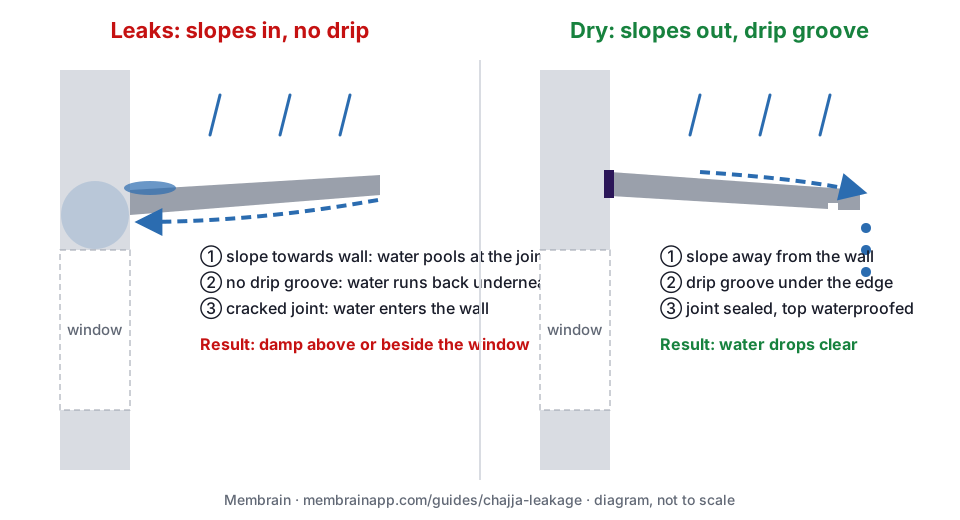
A chajja (sunshade) is meant to throw rain away from the window. When it slopes back towards the wall, has no effective drip edge underneath, or has cracked where it joins the wall, rain can track back into the wall above or beside the window.
Quick answer
What usually causes chajja leakage above a window?
The common routes are back-slope on the top surface, a failed wall-chajja joint, cracks in the chajja or water tracking underneath because the drip detail is missing or ineffective. The repair should address the water-entry side first; painting the inside wall will not stop rain entering outside.
Published · Updated
Part of the outside wall leaking in rain guide, which covers every usual source.
Signs you will notice
- Damp above a window or along the ceiling edge after rain
- Water stains on the underside of the chajja
- Algae or dark streaks on the wall just below the chajja
- Cracks where the chajja meets the wall
Where the water usually comes from
Often more than one source is at work, and each needs its own fix.
Cause 1
The chajja slopes towards the wall
Water collects on the chajja near the wall after rain.
Check it yourself: Pour a little water on the chajja and see which way it runs.
How it is usually fixed: Correct the slope of the balcony, chajja or ledge so water runs away from the wall, waterproof its top, and add a drip groove underneath.
Cause 2
No drip groove underneath
Water runs back along the underside of the chajja and down the wall.
Check it yourself: Look under the outer edge of the chajja for a groove or drip edge.
How it is usually fixed: Cut a drip groove or fix a drip mould along the underside near the outer edge so water drops off instead of running back.
Cause 3
Cracks where the chajja meets the wall
A crack runs along the joint between the chajja and the wall.
Check it yourself: Look at the joint from outside, or photograph it from a window.
How it is usually fixed: Pressure-wash the outside face, fill the cracks with a flexible crack filler, then apply an elastomeric exterior waterproofing system.
Cause 4
The window below is also letting water in
Damp continues around the frame even after the chajja is fixed.
Check it yourself: Check the frame-to-wall joint and the sill slope.
How it is usually fixed: Remove old sealant, reseal the frame-to-wall joint with a sealant suited to the frame material, and correct the sill so it slopes outward.
Methods follow proven, manufacturer-approved waterproofing systems. The right one for your building depends on what is found on site.
What a photo can and cannot tell you
Photo guidance points to the likely source. It is not a confirmed diagnosis.
A clear photo can show
- The chajja surface, edge and the joint with the wall
- Stains and algae below it
- Where the damp shows inside
A photo cannot settle
- The exact slope, without a water test
- Cracks hidden under paint
Simple checks before you call anyone
- 1Pour water on the chajja and watch where it goes.
- 2Look under the edge for a drip groove.
- 3Photograph the chajja from above and below.
- 4Note whether damp is above the window, beside it, or below it.
When you need someone on site
- The chajja is on an upper floor and cannot be reached safely
- The chajja concrete is cracked through or has exposed steel
- Several chajjas on the building leak
Where Membrain works on site, a site diagnosis confirms the source, and thermal imaging finds hidden leaks before anything is broken. The app checks whether your pincode is covered.
Common mistakes that waste money
- Sealing only the window when the chajja is the source.
- Painting the wall inside without fixing the chajja.
- Adding a coating on top without correcting a back-slope.
Before you accept a contractor's quote
- Does the quote correct the slope, or only coat the surface?
- Is a drip groove or drip mould included?
- Is the chajja-wall joint treated?
- How will the contractor reach it safely on upper floors?
Already have quotes? Membrain can compare them on scope, not just price. Planning the work instead? A written specification makes quotes comparable.
How this guide is built
Diagnostic basis
Membrain separates visible signs from possible water-entry mechanisms, then asks for evidence that can distinguish the remaining causes.
Repair-source governance
Public guides stay brand-neutral. When Membrain creates a repair plan, methods and products come from current approved manufacturer documents in its technical library.
Evidence limits
A photo cannot confirm concealed pipes, waterproofing layers or moisture depth. When remote evidence cannot separate the causes, a site inspection is the correct next step.
Technical notes behind this guide
Deeper reasoning on the moisture patterns and water-entry mechanisms used to interpret this problem.
Chajja se paani andar kyun aata hai?
Agar chajja deewar ki taraf jhuka ho, neeche drip groove na ho, ya deewar ke joint pe crack ho, toh baarish ka paani deewar mein chala jaata hai.
Thoda paani daal ke dekho kidhar behta hai, aur neeche ki taraf groove check karo. Ilaaj aksar dhalaan theek karna, joint seal karna aur drip groove banana hota hai.
Frequently asked questions
Why is there damp above my window only in heavy rain?
Water collects on a chajja that slopes inward or runs back underneath it without a drip groove, then soaks into the wall above the window.
Can a chajja be waterproofed without breaking it?
Often, if the concrete is sound and the problem is limited to slope, the wall joint, surface cracking or the drip detail. Structural damage, exposed reinforcement or badly deteriorated concrete needs a different repair and should be inspected on site.
Is chajja leakage the same as window leakage?
They often appear together. If damp is above the window, start with the chajja; if it is around the frame corners, start with the window joint.
Not sure which one it is?
Share a photo and answer a few questions. Membrain shows the likely sources and a repair plan built from proven waterproofing methods, in minutes. Free to start.
Remote guidance, not a site inspection.